
Description
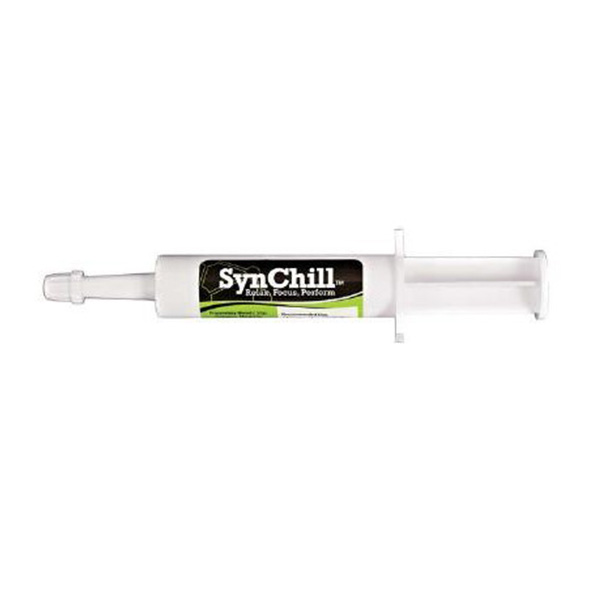
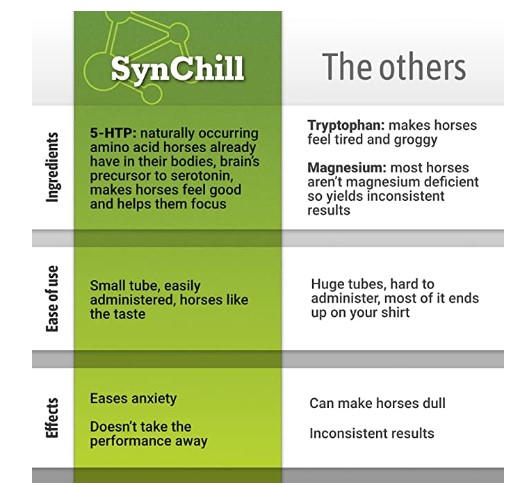
SynChill™ is composed of the natural brain chemical, 5-HTP (5-Hydroxytryptophan); a totally unique offering in the world of equine calming supplements. 5-HTP is the precursor to serotonin, the hormone widely recognized as a natural antidepressant, and is critical to the horse calming properties of SynChill™. Some commonly known vitamin pastes and powders show a negligible response to equine stress, and the tryptophan products alone do not have the ability to cross the blood-brain barrier, rendering them virtually useless in decreasing anxiety unless used at very high, unnatural levels. Dispensed in handy, single-dose syringes, SynChill™ is a pleasantly sweet-tasting, odor-free, clear gel. Composed solely of endogenous ingredients, SynChill™ is not a drug and contains no banned substances. SynChill™ oral gel is a proprietary blend of 5-HTP, Vitamin B6, and melatonin that took years to develop and perfect. Unlike typical tryptophan-based supplements, SynChill™ is the only one that contains 5-HTP (5-hydroxytryptophan) — a game-changer among equine calming products. An important amino acid, 5-HTP crosses the blood-brain barrier (as an active ingredient) to become a key player in the formation of serotonin; one of the body’s widely recognized “feel good” hormones. Vitamin B6 promotes the conversion of 5-HTP to serotonin, further enhancing its natural horse calming effects. Melatonin increases and intensifies the production and maintenance of serotonin, complementing the stress-reducing properties of both hormones. Please see the diagram below for a graphic explanation. 5-htp makes SynChill™ a better horse calming supplement than those containing Tryptophan. To become 5-HTP, an active ingredient, tryptophan must first be metabolized by the liver to freely cross the blood-brain barrier. SynChill™ contains 5-HTP which crosses the blood barrier freely. Vitamin B-6 promotes the conversion of 5-HTP to serotonin which is the active horse calming agent.
Recommended Use: Administer entire contents into horse’s mouth 1-2 hours prior to a stressful event.